
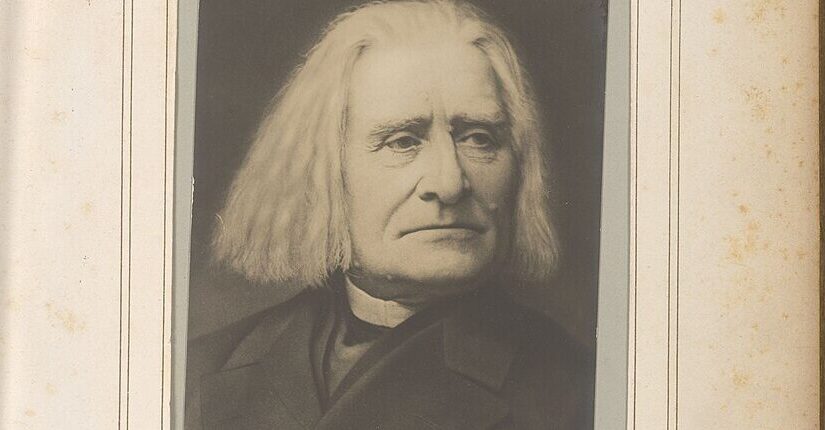
In recent years, new discoveries in musicology have emerged, primarily due to increased interest in the arts. These include a Chopin waltz and a set of Mozart chamber music, among others. However, a short piece by Franz Liszt, Der Todesengel S.190a (“The Angel of Death”), has received very little attention. It occupies an interesting position in Liszt’s oeuvre since it was written relatively late in his lifetime. The piece is only about 3 minutes long, yet it exemplifies all the major characteristics of Franz Liszt’s late piano music.
This piece was discovered in the Georgetown University Archives by Liszt scholar Minkyu Kim. The manuscript itself appears to have been written rather quickly, suggesting that Liszt intended to give the piece to someone, rather than submit it for publication. Also present on the manuscript is some writing from Liszt, revealing that this piece was written in February of 1871 in Pesth (now part of Budapest, Hungary). While this piece has not yet received a studio recording, it has been performed twice: once by Minkyu Kim in 2022 and again by renowned pianist Leslie Howard in 2023. The piece was first published by the Liszt Society in 2022, then by Lucas Allori, co-founder of Revue des Romantiques, in 2025, and it will likely be published again in 2027 by the New Liszt Edition.
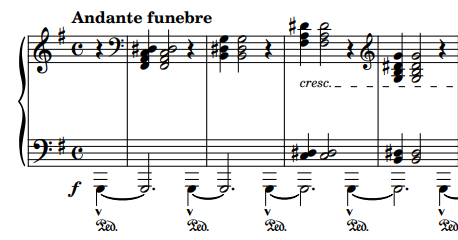
Der Todesengel lasts is extremely short: only 50 measures long. It consists of two contrasting sections: a stormy introduction and an ethereal ending. It begins in E minor with a repeated pedal point. Above the pedal point, dissonant chords sound out as the music crescendoes. In measure 12, the music takes a different turn with a quiet B major seventh chord, setting the music up for the second section.
The next section is the parallel major key: E major. Liszt typically reserved this key for religious and spiritual music, so its use here suggests that this piece has a strong religious connection rather than simply being a short character piece. Other pieces in E major include many of his Consolations S.171a/S.172, and Angelus!, S.173/1 (the early versions are also in this key).
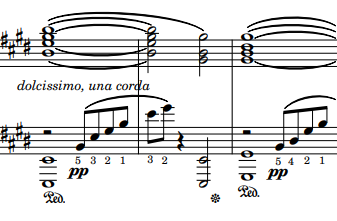
This second section consists mostly of a melody accompanied by arpeggios. The accompaniment gradually fades out, and by the end, the melody is mostly unaccompanied. The last five measures of the piece consist of floating chords in the high registers of the piano, which, like the B minor sonata, provide a beautiful but quiet ending rather than a loud one. At the end of the piece, Liszt signs his name and writes “Febuar 71 – Pesth”, indicating the month and location in which he wrote this piece. Not much else is known about Der Todesengel, but it is a beautiful character piece that provides valuable insight into the composer’s life and late style.