“For the virtuoso, musical works are in fact nothing but
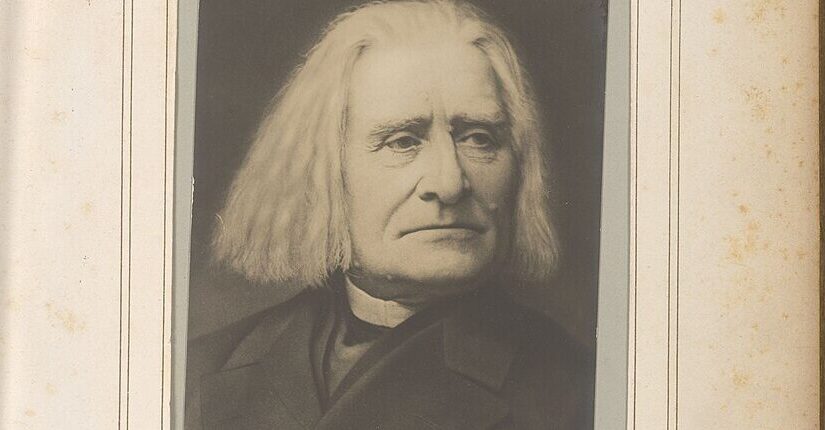
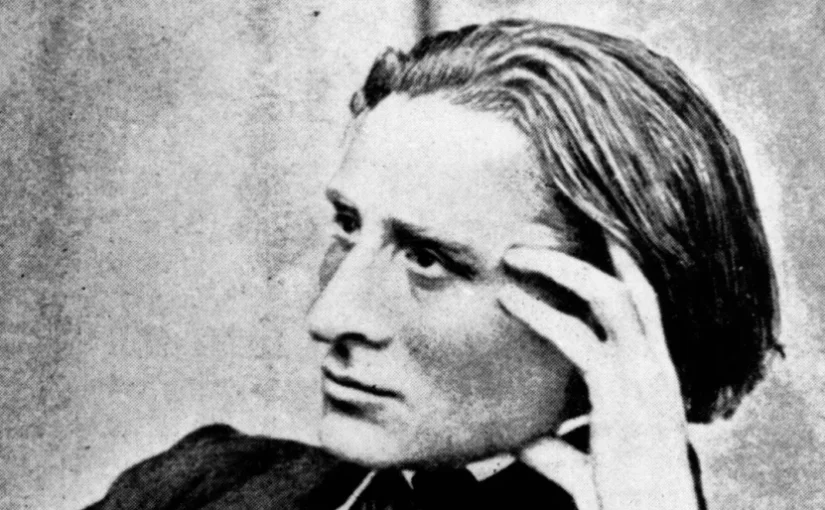
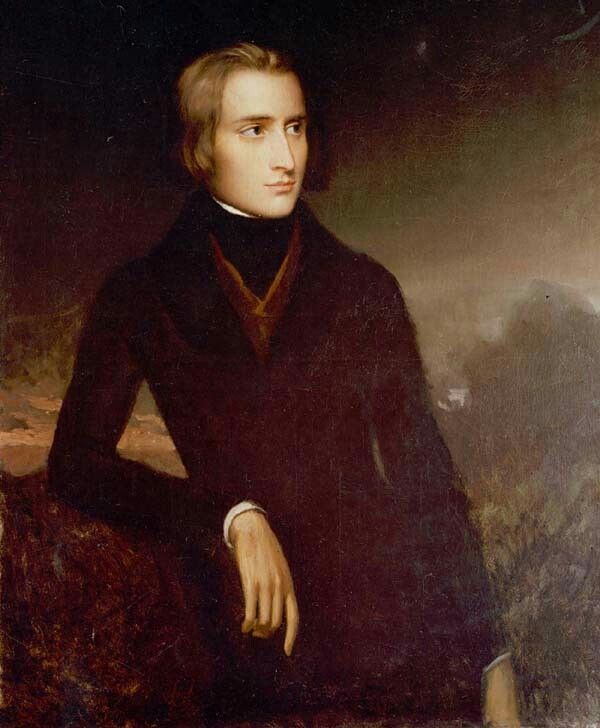
Franz Liszt
tragic and moving materializations of his emotions;
he is called upon to make them speak, weep, sing and
sigh, to recreate them in accordance with his
own consciousness.”
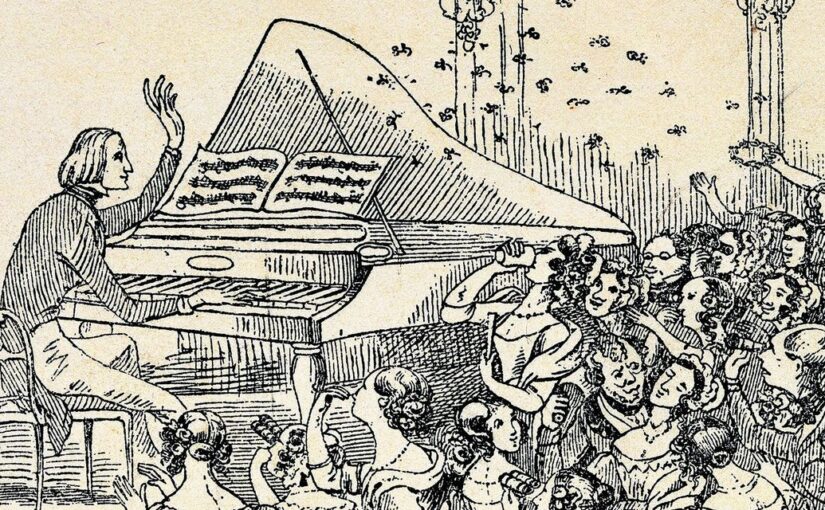
Gradual cultural change captured the European musical landscape in the 1860s. The fervor of emotions and feelings from previous decades subsided, and a classical-esque revival ensnared the new generation’s zeitgeist. The era of Early Romanticism (characterized by ideas such as expression over form and artist over audience) came to an end, and the musical community saw the emergence of late Romantic composers such as Wagner. Solemnness, earnestness, and a stricter adherence to musical structure replaced the extreme Romantic ardor of the 1830s and 40s. Franz Liszt himself was a changed man, too. He had already retired from the concert stage for a decade and a half, focusing primarily on composition and losing many aspects of the celebrity life that characterized his younger years.
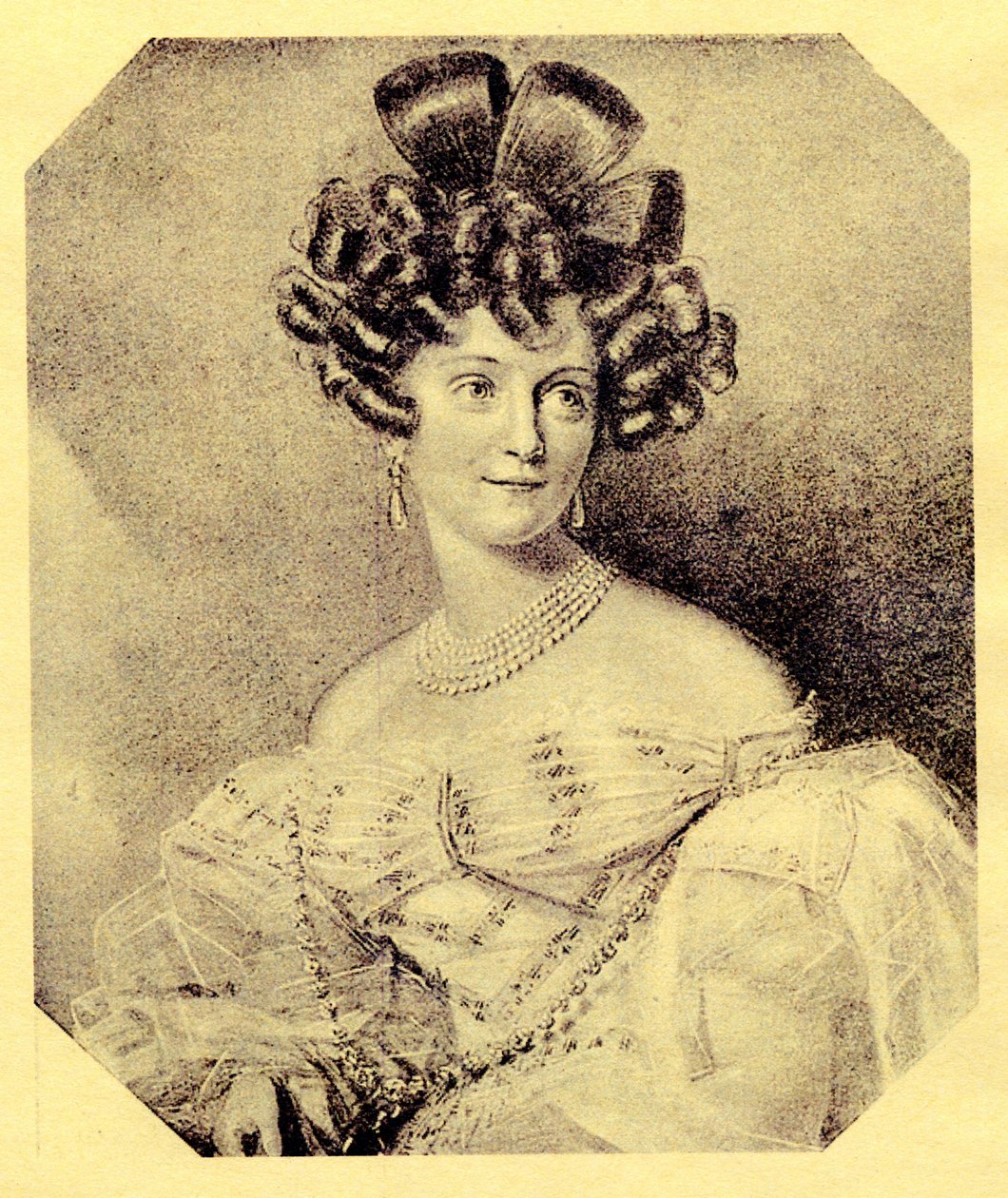
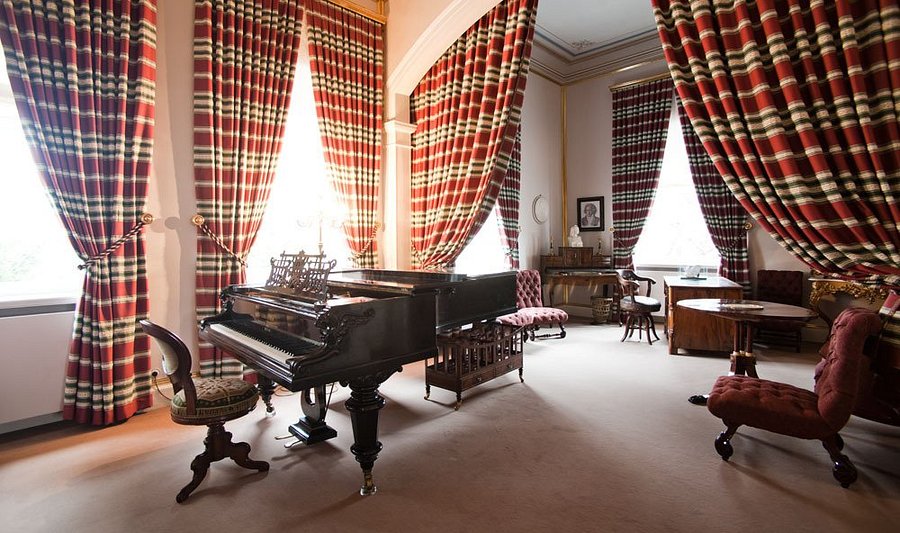
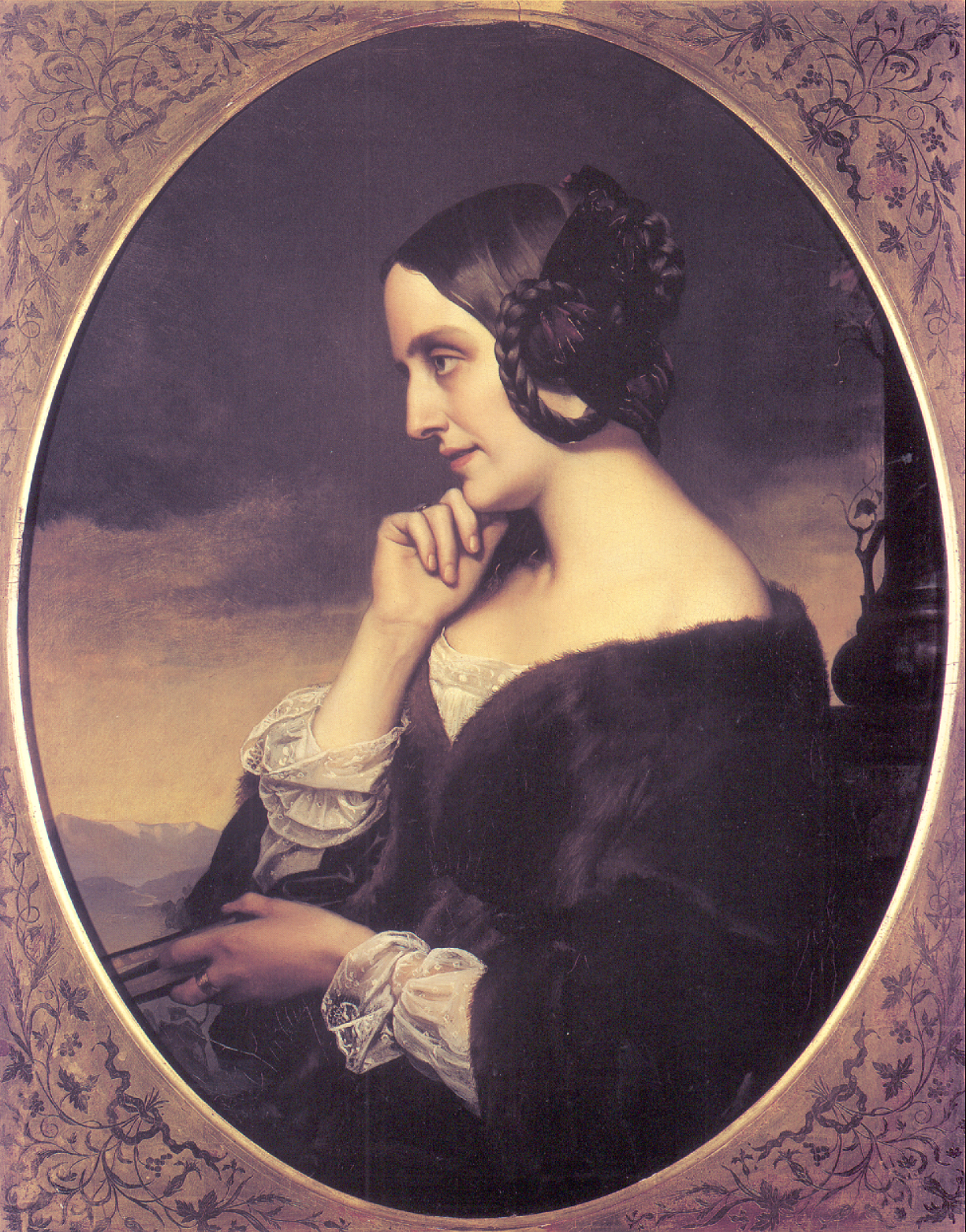
After moving to Rome from his musically tenacious home in Weimar in 1861, Liszt began experimenting freely with musical techniques. His good friends and lovers from his early adulthood, including Chopin and Marie d’Agoult, became insignificant fragments of his past. He thus sought out Rome as a haven to freely release the thoughts of his troubled mind in the form of music and to seek the permission of the papacy to marry Princess Carolyne zu Sayn-Wittgenstein, with whom he had maintained an adulterous affair for the past 20 years.
One great musical staple exemplified during this transitional period is Zwei Konzertetüden S.145, which serves as a thematic and stylistic precursor to Liszt’s later compositional style. These works feature Liszt’s earlier, more virtuosic techniques, but also showcase the musical and technical restraint characteristic of the composer’s late works.
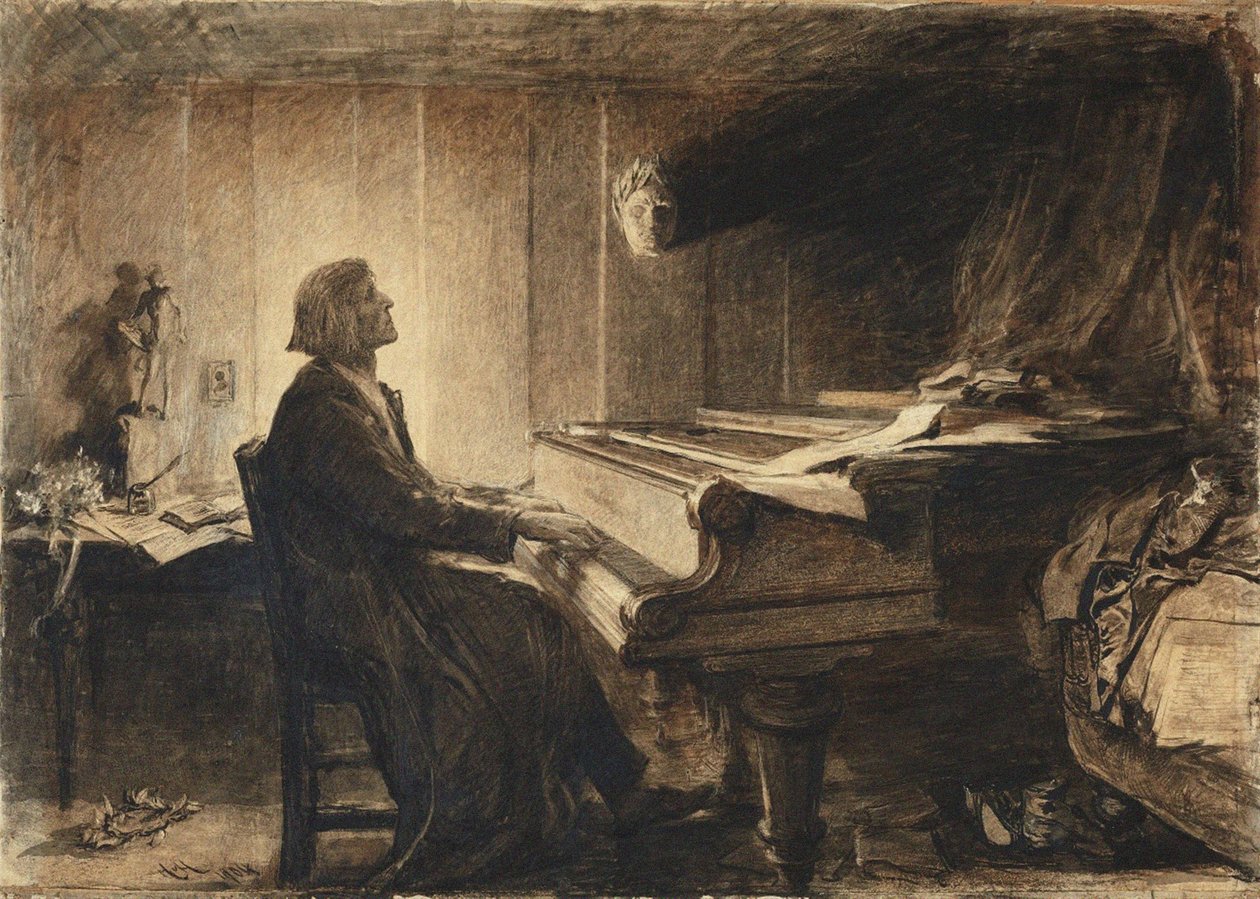
Liszt was fickle with marking the purpose of the Two Concert Etudes. They were dedicated to Dionys Pruckner, a student of Franz Liszt from a decade earlier in Weimar who had begun his own touring and had assumed the role of pedagogue at Stuttgart Conservatory. The dedication, however, is markedly confusing because the pieces were intended for Ludwig Stark and Sigmund Lebert, both piano professors and co-founders of the Stuttgart Conservatory. Liszt composed the pieces for the duo’s Grosse theoretisch-praktische Klavierschule, a piano method famous at the time, which was translated into multiple languages and printed throughout Europe. Though published in 1858, it gained fame in its fourth edition of 1870.
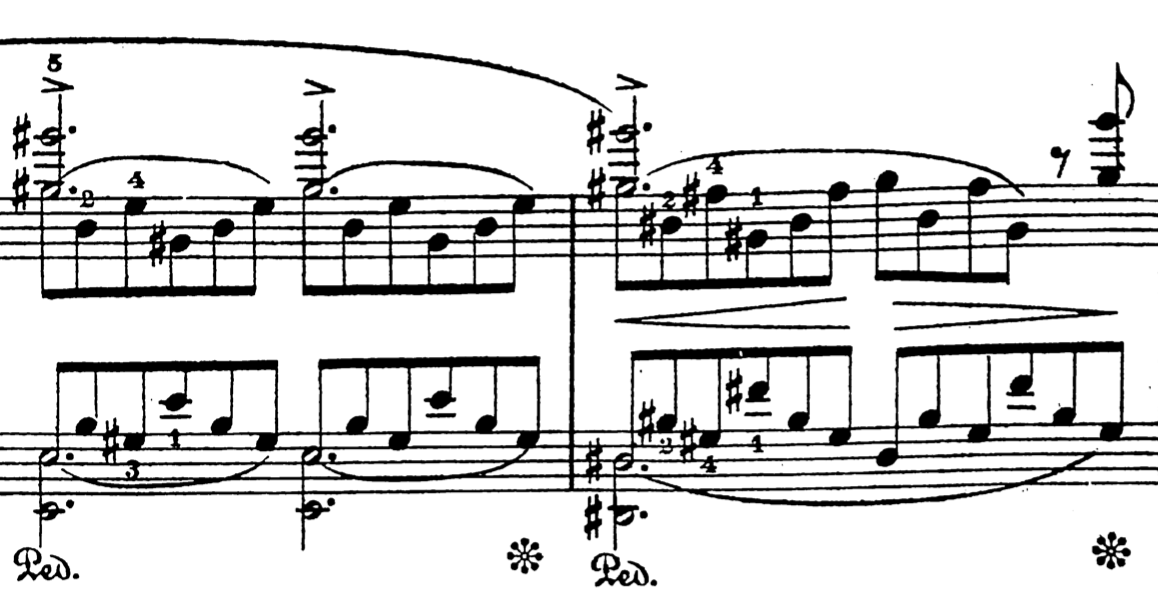
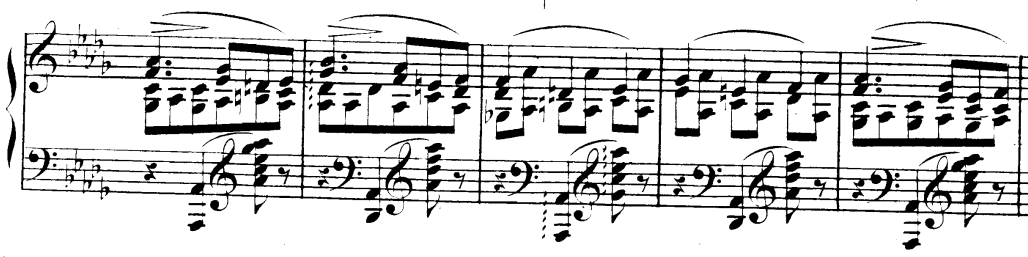
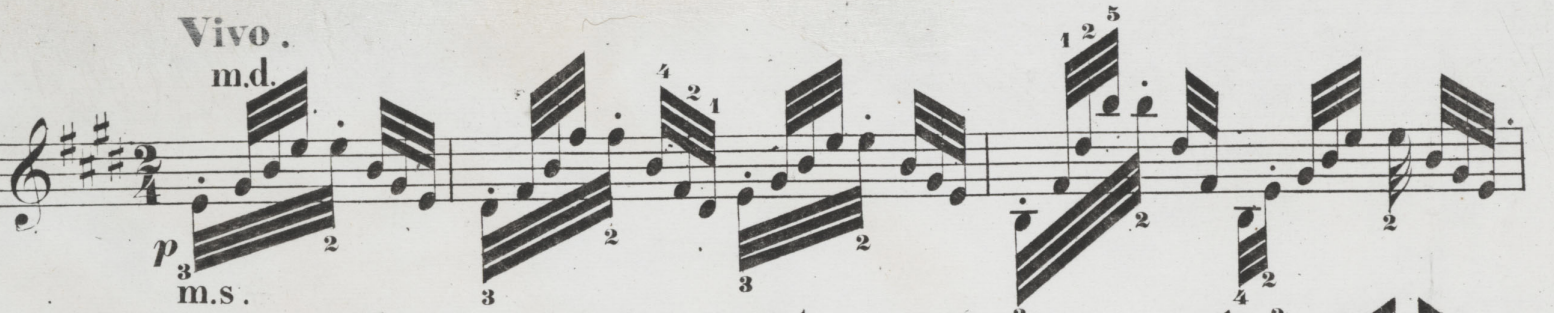
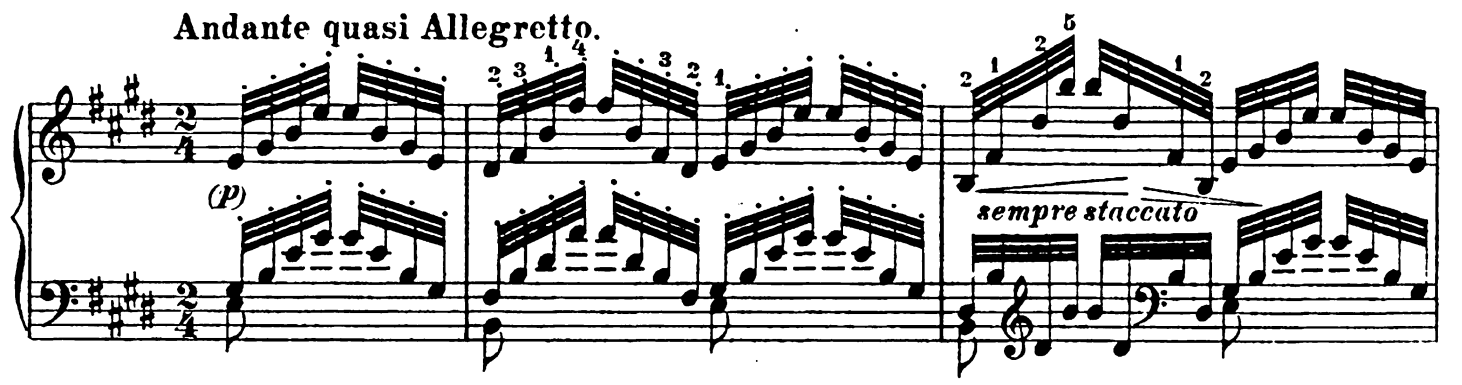
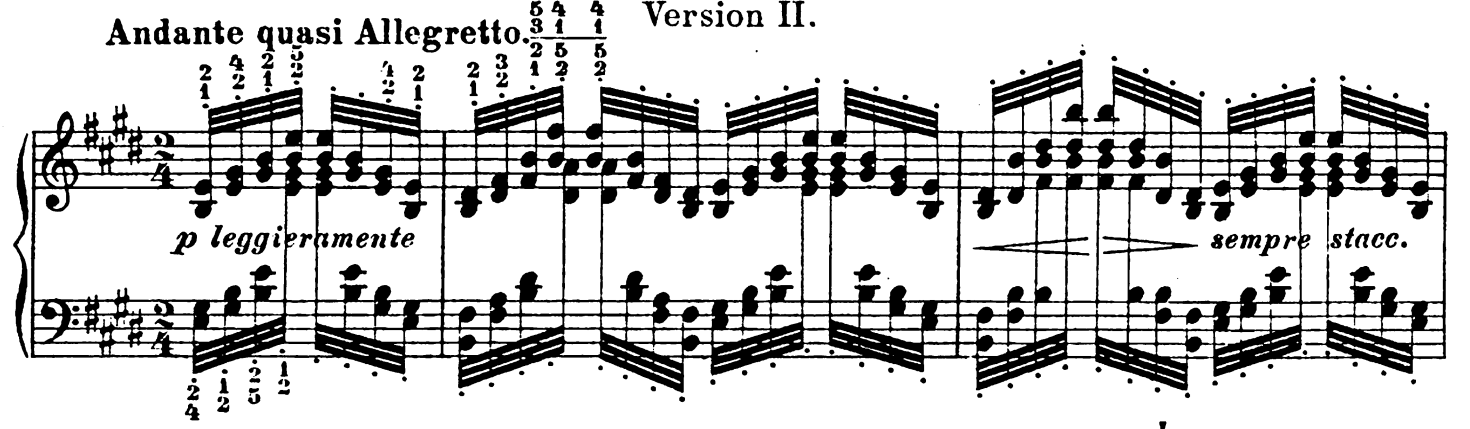
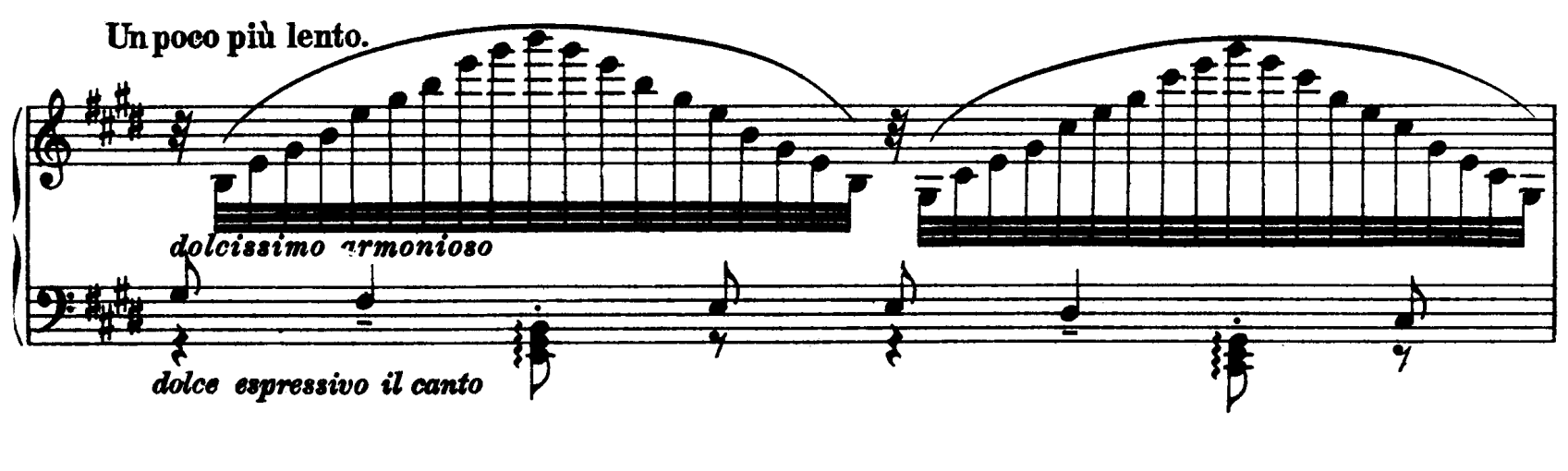
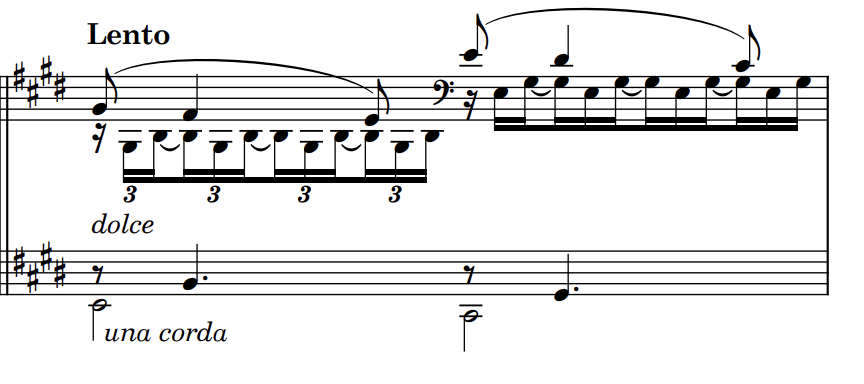
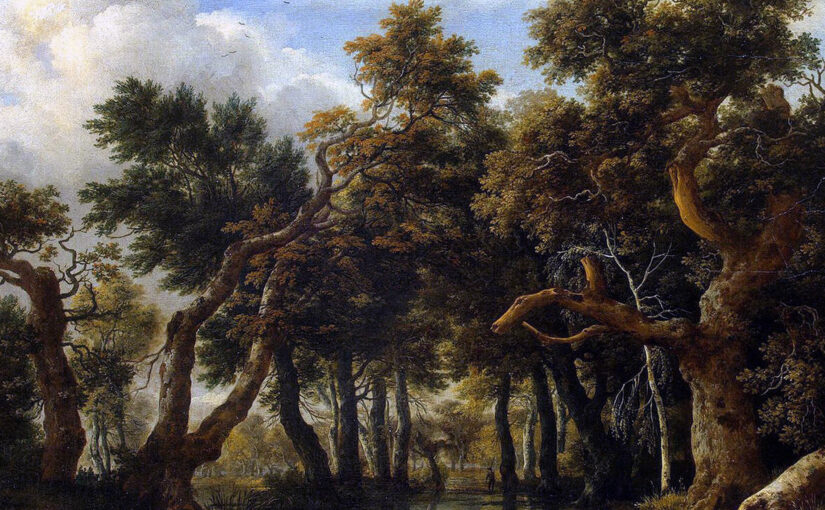
The first piece in the set, “Waldesrauschen,” is the lesser-played of the two and is in D-flat major. The piece is very ethereal and song-like, evoking strong imagery of wind echoing throughout the forest. In some ways, it is similar to the earlier “Au lac de Wallenstadt” from the first Années de Pèlerinage, S.160. Like most Romantic piano etudes, “Waldesrauschen” transcends the typical classical style (which usually followed the etude’s literal meaning of “study,” emphasizing mechanics and the development of near-robotic technique). And yet, behind the flowing song-like melody in the left hides a secondary purpose for the piece’s composition: the repeating right-hand accompaniment, which builds finger independence. The voices then swap hands, with the ever-constant humming harmony echoing in the left hand and the melody strengthened as octaves in the right.
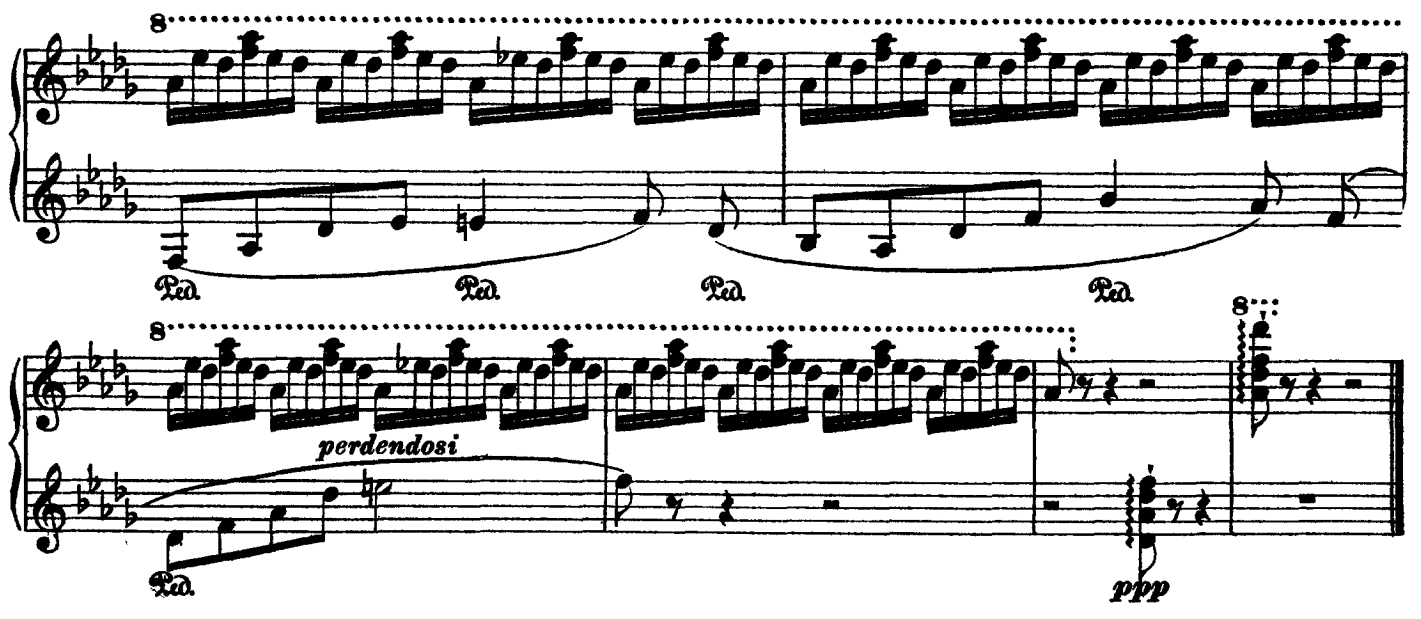
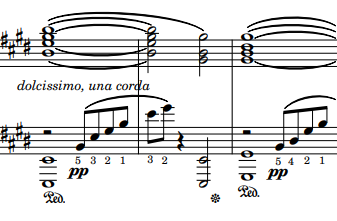
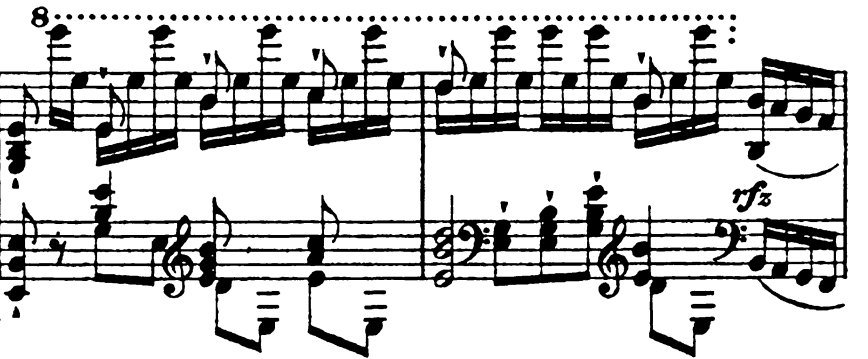
The developmental middle section brings a dramatic turn to the music: decisive, passionate octaves in the right hand resonate with the extremely cadential left hand, which rapidly ascends and descends. The techniques and phrasing used in this part draw connections to Liszt’s Sonata, S.178, dating from nearly a decade before, thus placing this etude firmly in the crossroads between the Weimar period and his late phase. At the end of the piece, Liszt has the right-hand accompaniment fade slowly away, ending with a ppp rolled tonic chord in the middle register, followed by an even softer tonic “murmur” in the upper register. Characteristically, Liszt’s “Waldesrauschen” features the common usage of the sixth chord, which Liszt employed in many of his introspective, often religious compositions.
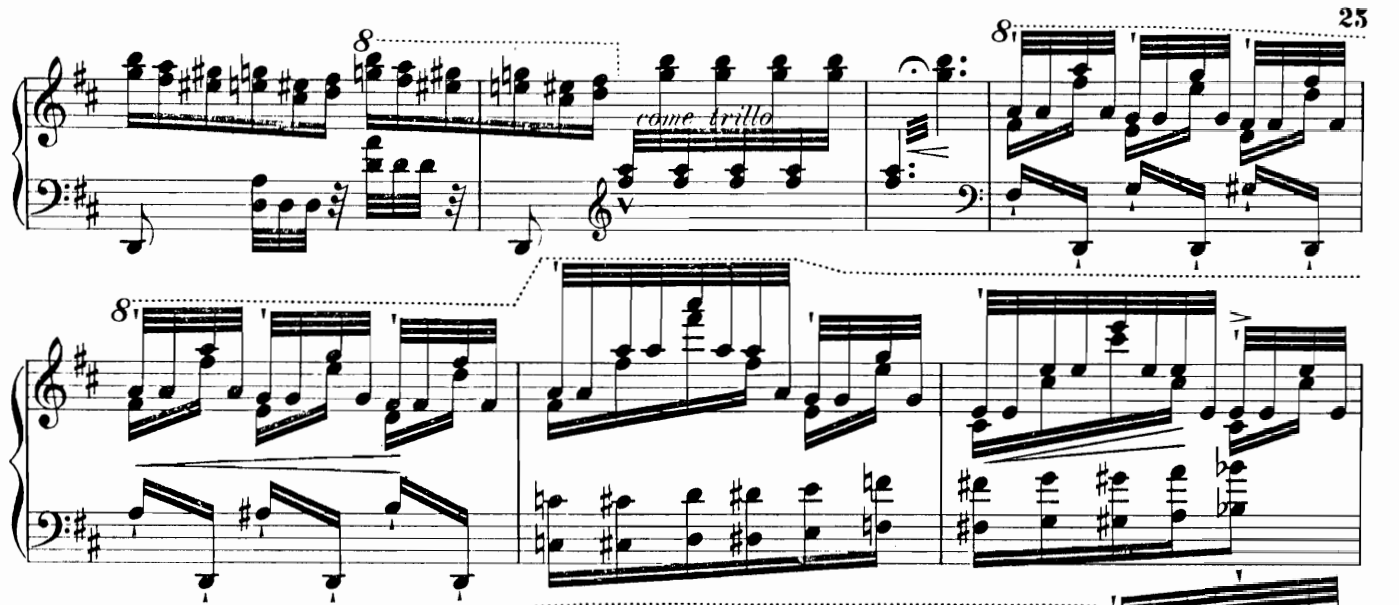
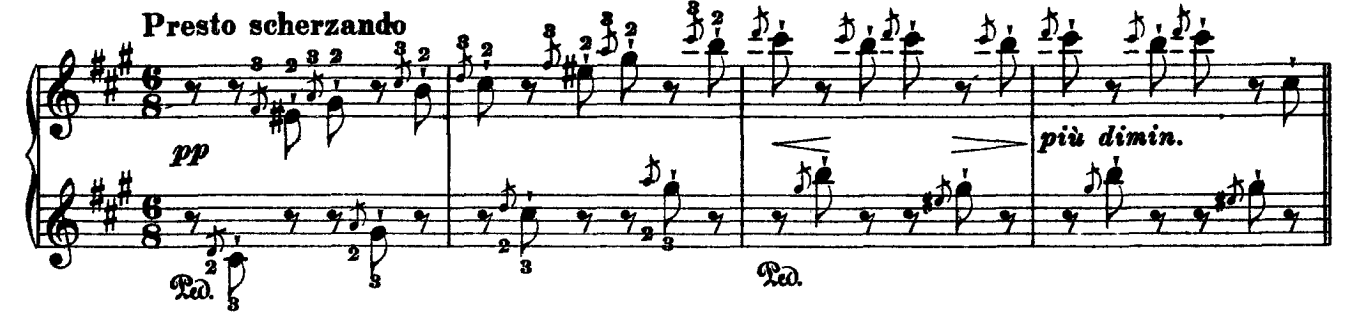
“Gnomenreigen” serves as quite a contrast to its previous companion. Pianists choose to perform it in concerts and competitions due to its technical difficulty. The translation of the title (“Round dance of gnomes”) suggests the imitation of magical creatures known to be stout, light, and yet quick. The tempo marking reflects this sentiment: “Presto scherzando.” Not only does Liszt require utmost speed, but he also insists on maintaining the scherzo-like nature of gnomes, which ultimately entails lightness and precision amidst fast passages. If it was not obvious enough, the fifth measure marks “staccato e leggierissimo,” meaning “detached and very light,” which verifies Liszt’s intentions. The piece’s central theme begins in F-sharp minor, emphasizing quick grace notes. Liszt then elaborates this in an A-major variation with an exceptionally fast right-hand under the marking of “Un poco più animato.”
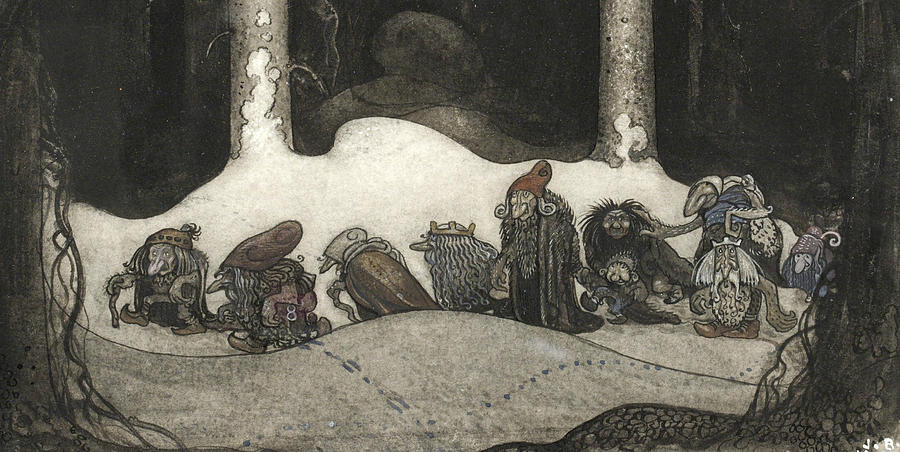
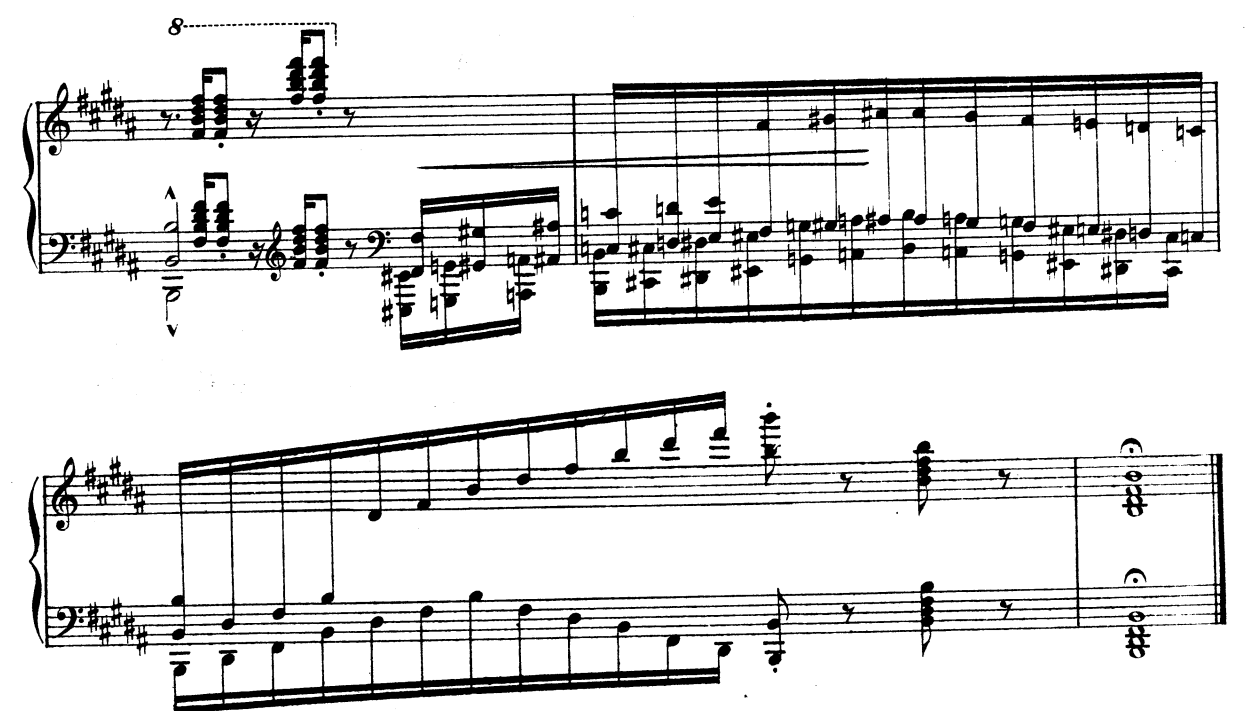
The first theme and its elaboration repeat in B-flat major in a similar fashion, and then the music suddenly takes a darker turn as the key follows suit into the relative minor: the passage dips into the bass-clef area in a mysterious and earnest development. The section contains 54 consecutive bass “D” notes in an ostinato manner. F-sharp minor then grows into a grand recapitulation of the second elaborative theme. Then the soft first theme suddenly swallows the piercing climactic passage, as if the gnomes were returning underground after their fanfare, and the entire composition were a dream. Yet notably, “Gnomenreigen” ends on a F-sharp major (the parallel major of the initial key!) ascending arpeggio, suggesting Liszt’s optimistic, upward-looking objective for it. Perhaps Liszt honestly did believe in the good luck of gnomes.
Luckily, unlike many of Liszt’s pieces, the Two Concert Etudes gained popularity for a short period of time and maintained a relatively favorable status even after their creator’s passing. Perhaps the Zwei Konzertetüden’s success arises from their combination of quintessential early romanticism with the proto-impressionist flair of the very late 19th century, making them musically and historically rich. The pieces are representative of a changing European musical landscape where music itself was no longer homogeneous: taste grew diverse and fragmented, and visionary artistic leaders established different schools of music that advanced Western music in their own ways (namely, Leipzig’s conservative school, Wagner’s New German School, and even the Russian kuchka). As Liszt’s popularity declined with the arrival of a new generation of piano virtuosos, he reached a level of emotional maturity and artistic development that fundamentally altered his musical output.