
“Here, in many respects, is the essence of Liszt’s
Tim Parry
creativity— the skillful manipulation of thematic ideas,
the fusion of drama and lyricism, the innovative approach
to instrumental texture and formal architecture, and the
centrality of pianistic virtuosity to the music’s
expressive vocabulary.”
The ballades of one of Liszt’s most outstanding colleagues and true friends during his early years as a touring virtuoso, based in Paris, Frédéric Chopin, are among the most well-known and widely performed staples of the piano repertoire. Chopin viewed the ballade as something more than a short, lyrical piece of music. His four compositions pushed the boundaries not only of their definition in the early years of romanticism but also of pianistic capability itself. Liszt, who followed Chopin’s path in this sense, contributed to the musical world with two of his own ballades a few years after his friend, though unfortunately, his two are significantly less popular. And yet, as relatively niche as they are, Liszt’s are comparable to Chopin’s in the sense of musical innovation and bravura prowess. One can argue that they are even more heaven-storming and “transcendental.”
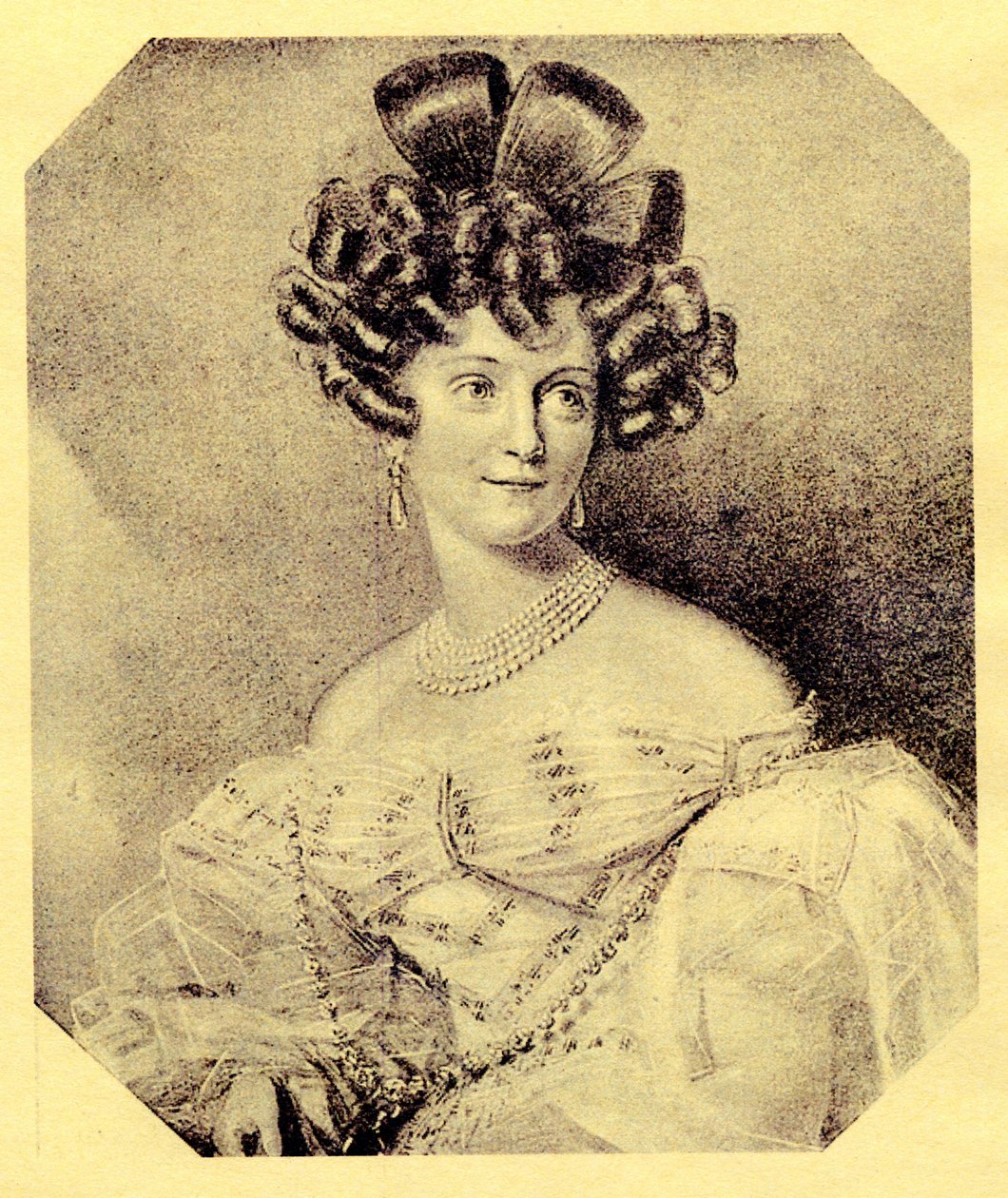
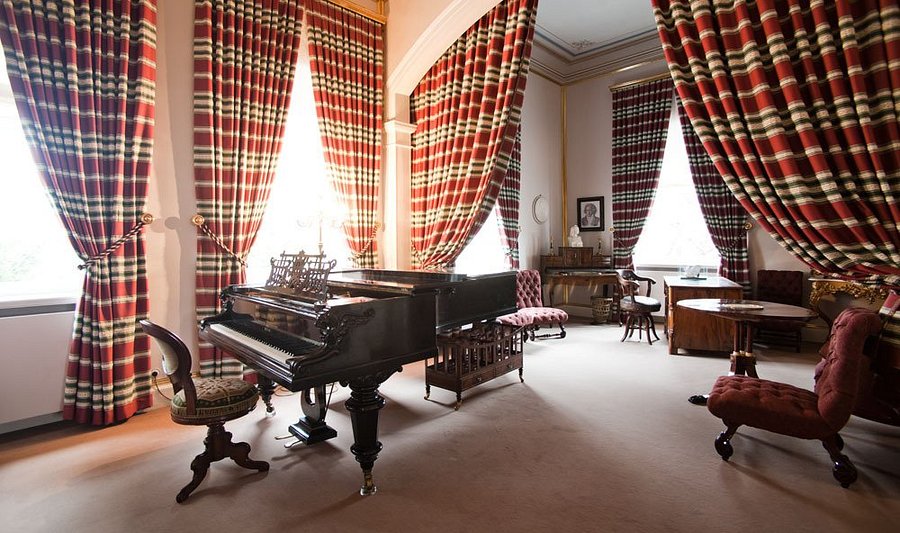
By 1848, the date of Ballade No.1 S.170’s composition, Liszt had retired from the touring concert setting, settling in the German city of Weimar for the greater part of his middle ages. Here, as Kappelmeister or “court conductor,” Liszt would focus solely on his compositional skills, and his music from this era was generally still relatively virtuosic. Still, bravura was intentionally restrained when it was not necessary in the musical context, marking a stark contrast with his earlier works. His relationship with Countess Marie d’Agoult had long been over, and Liszt moved on to Princess Carolyne zu Sayn-Wittgenstein, a Polish noblewoman who would be highly dedicated to Liszt’s musicmaking, helping him with various tasks within his social circle and musical community, and with whom Liszt would keep a loving relationship for 40 years. Liszt also championed and helped publicly advocate for works by Schumann, a longtime musical associate at this point, and Wagner, who would eventually marry Liszt’s daughter to d’Agoult. Wagner, who had met Liszt in Paris as a struggling musician seeking support and had also been acquainted briefly in Dresden after the premiere of his own successful opera Rienzi, would become of particular significance to Liszt. In a few short years what musicologists call “The War of the Romantics” would begin, with Liszt and Wagner, primarily based in Weimar, establishing the Neudeutsche Schule or “New German School,” a branch of radically innovative romantic musicmaking whose progressive ideas haunted the oppositional conservative school led by Johannes Brahms and Clara Schumann, primarily based in the bigger German city of Leipzig. Naturally, both sides claimed ideological lineage from Ludwig van Beethoven, the forefather of musical romanticism.
In 1845, Liszt composed the first version of his Klavierstück No.2 S.189a, a short and quite beautiful lyrical piece that would serve as the backbone of Liszt’s first Ballade. The Klavierstück would be revised soon after into a second, simpler version. This simpler version would then be used again in another work, “Dernière illusion,” the fourth entry in Liszt’s Préludes et Harmonies poétiques et religieuses, S. 171d. Taking twelve minutes to perform, “Dernière illusion” is the most complicated entry to the set, possessing numerous key changes and harmonic expansions. The introduction is clearly the predecessor of Ballade No.1.
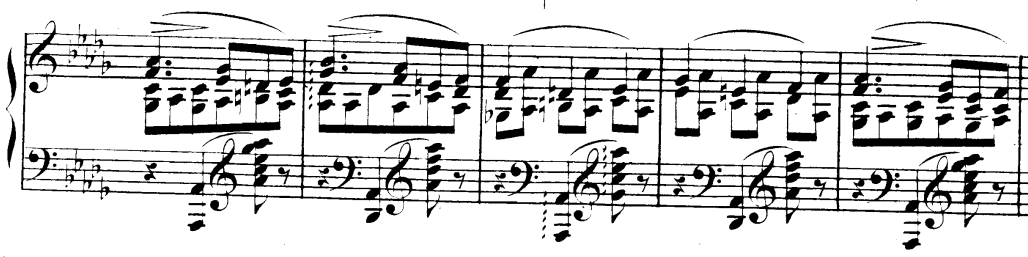
The first Ballade originally bore the title “Le Chant Du Croisé,” meaning “The Chant of the Crusader,” echoing the piece’s evocative motif. In later editions and publications, Liszt redacted this title, possibly in hopes of opening creative interpretations to the Ballade (it was not a program piece, after all), or perhaps he felt differently regarding the composition after a period of maturation living in Weimar, living a style more closely related to classical era musicians. The subtitle speaks to Liszt’s growing fascination and belief in Catholicism, which would become an obsession as he neared his final years. Containing two primary themes—one a simple poetic melody opening the piece and the other a march that appears midway through, marked Tempo di Marcia—Liszt’s first Ballade expands and recapitulates the themes with greater harmonic depth and technical complexity. The first few measures are highly similar to Chopin’s first Ballade, a piece far more frequently performed. The first cantabile theme, in a fashion very familiar to the hands of Lisztians, uses thirds highly centered around the dominant with no small amount of hand crossing.
The ballade quickly returns to the central opening theme after a few minutes of the march’s variations. However, this second theme returns in greater glory in the coda, which is surprisingly restrained and emotionally controlled compared to the stereotypical, musically lavish endings of Liszt’s other compositions and fantasies. The two themes provide distinct textures that indicate Liszt’s casual mastery of the keyboard: the first, though it begins simply, soon takes on a staccato feel similar to a scherzo, a style commonly used in the key of D Major. In the second theme, the key turns to D-flat major for the heroic march, with technicalities resembling standard Liszt oeuvre (Hungarian Rhapsodies S.244, for example). Among blocked chords in dotted rhythm are scales marked “rapido con bravura.”
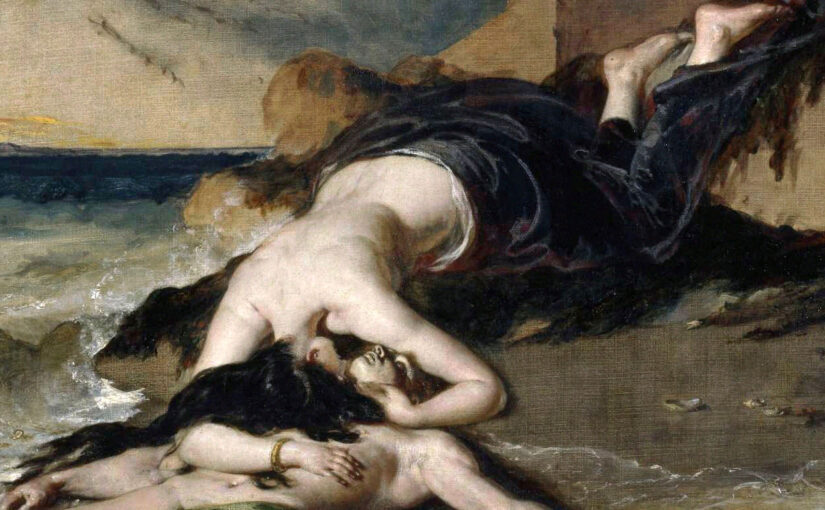
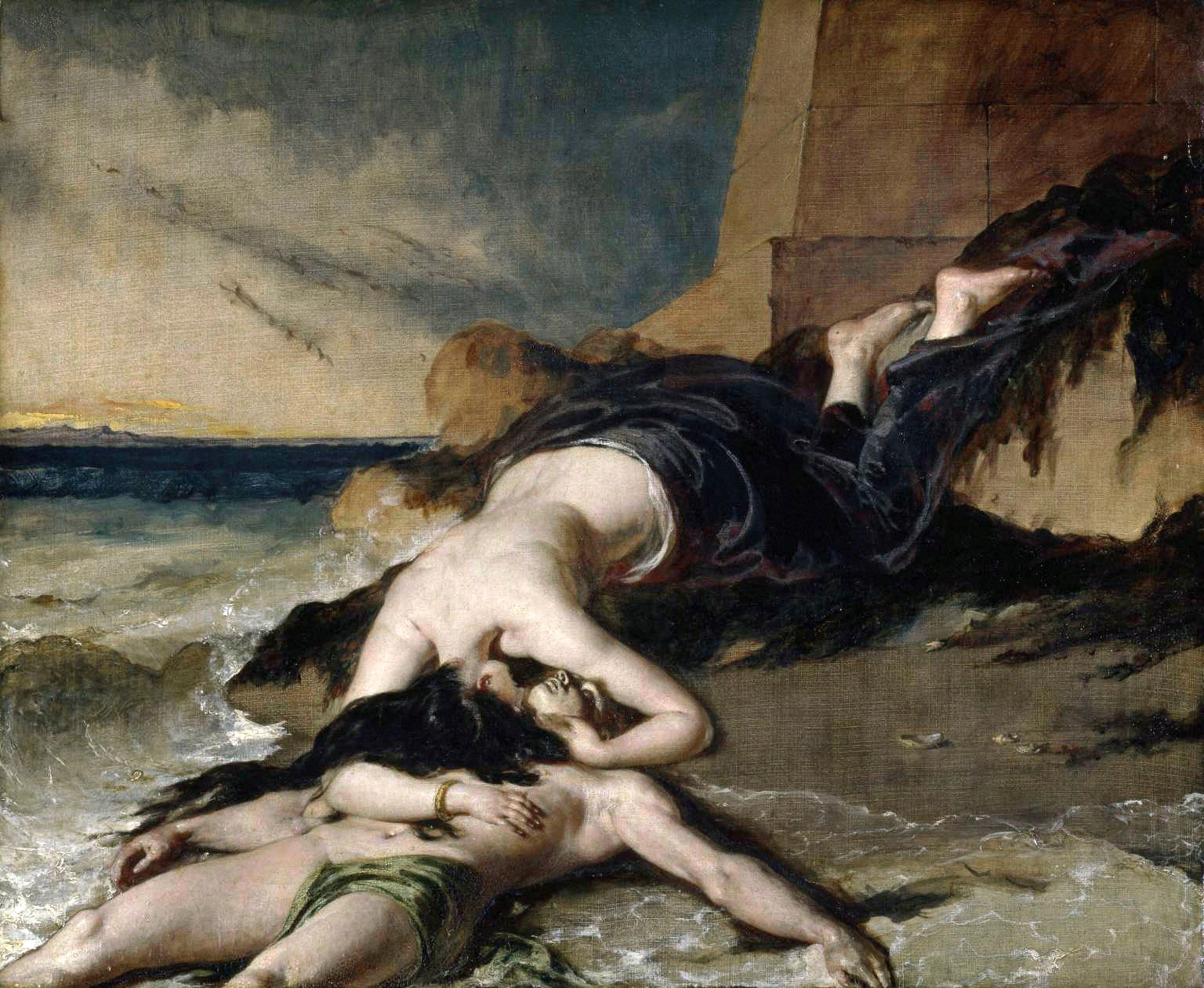
The more famous Ballade No.2 S.171 of Liszt is rich with lush melodic and harmonic layers, amalgamating into a masterpiece comparable to the finest music. It was written around the same time as the B-minor Sonata. The second Ballade is centered on contrast and sudden shifts, as well as unpredictable repetitions (with some motifs repeated up to seven times, of course, with transformations). It was dedicated to Count Carl Friedrich Wilhelm Emich, Prince of Leiningen (also known as Charles de Linange), half-brother of Queen Victoria. Some famed pianists such as Claudio Arrau, who can trace a pedagogical lineage to Liszt through his teacher and Liszt’s student Martin Krause, claim that Liszt’s second Ballade was based on the Greek myth of Hero and Leander, a love story about Leander’s dedication to visiting Hero, a priestess of Aphrodite. Hero swims across the Hellespont Strait every night to see her, but as winter comes and the weather grows more challenging, they agree to wait for the warm seasons to return. One day, Leander sees Hero’s torch on the other side and attempts to swim, but as the wind blows the torch out, Leander loses his way and drowns, with Hero finding his dead body and joining him in death, locked in an embrace, while the two wash ashore. Indeed, the piece grows darker with every repetition of the motif, with chromatic ostinati that foot-stomp with increasing vigor and foreboding each time, until the climax. Arrau puts it: “You really can perceive how the journey turns more and more difficult each time. On the fourth night, he drowns. Next, the last pages are a transfiguration.”
Similar to the first Ballade, this piece uses two primary themes: a menacing opening melody is accompanied by a low bass rumbling moving up and down through the bass registers, resembling waves of the Hellspont in some sense. Arising from this darkness comes a vocal baritone sigh. The theme is repeated once again a semitone lower, and similarly, out of the shadows comes a hopeful yet short-lived line. As the theme dies away, a brief period of silence passes, and the second march theme awakens the audience. Triplets and runs that require no little dexterity from the pianist ensue, opening and expanding later into a singing, harmonious cantabile theme that echoes the early passage with less visible energy. Finally, as the coda looms ever closer, the ballade turns into a triumphant, near-divine jubilation as technical complexities reach their pinnacle and, as Arrau claims, Hero and Leander undergo a spiritual and emotional apotheosis. The zenith, in exalted yet familiar chromatic octaves, quickly dies down into a serene close, recapitulating the first theme heard fifteen minutes earlier with even less vivacity as chords slowly fade into silence. The overall structure of the piece can be loosely described in sonata-allegro form terms, but it’s difficult to precisely dissect due to the rapidly changing thematic material, with large sections of the B-minor piece resembling something closer to Phrygian or Mixolydian tones.
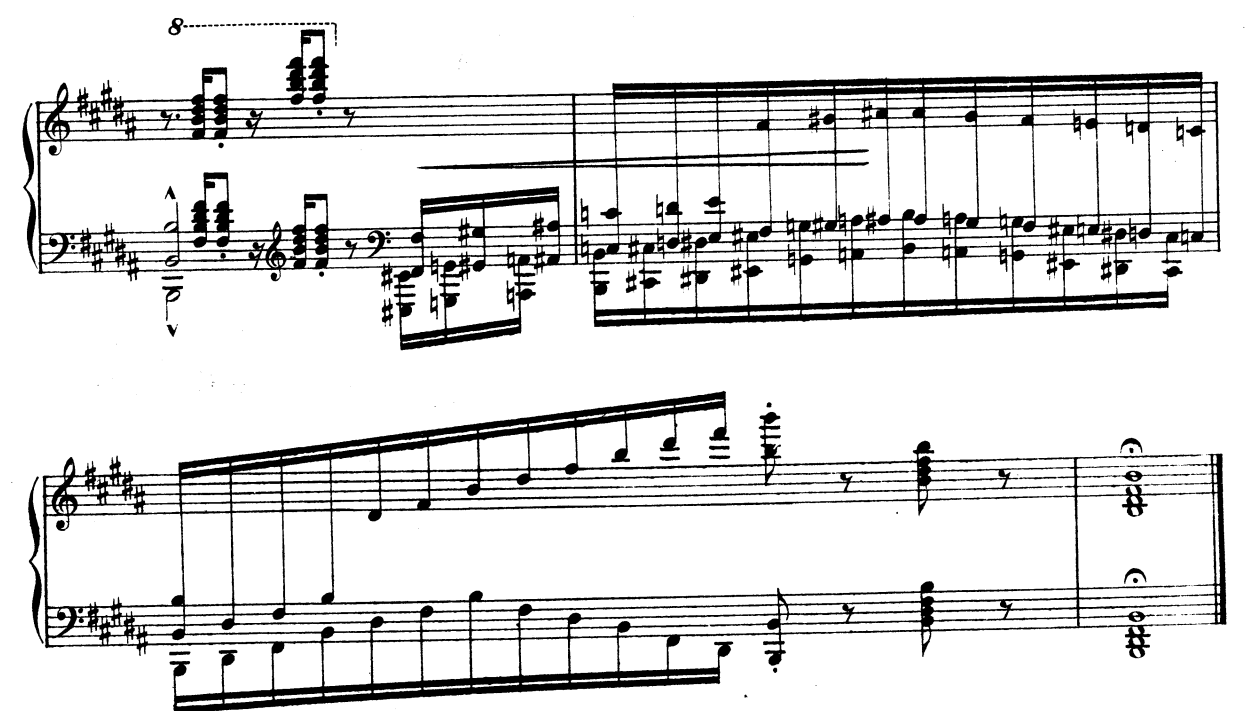
Included in earlier versions of the piece, the second Ballade has two alternative endings composed only a few months earlier. The first version does not have a poetic ending but rather evolves into a dotted march rhythm that is entirely virgin to the ears, resembling nothing heard earlier in the piece, save, as one could argue, for the first few lines of the second march melody in some respects. This version ends with interlocking octaves moving from bass to treble in the chord progression, then back down again, finally ending on a satisfying B-major chord doubled in the left hand. The second version, once again, does not include the popular ending and is similar to the first, but is more consistent with the piece’s nature by ditching the dotted rhythms and instead employing a rolling triplet right hand with the same motif. The octaves are identical to the first version, but instead of ending rather abruptly, Liszt actually extends and elongates the closing cadence with doubled chords repeated going up an octave each time (in nature the same as the fourth repetition of the first theme) nestling in between interlocked chromatic octaves, creating a grand aura for the central chordal octave as it jumps to different degrees, eventually landing on the B-major tonic in a spirited arpeggio. Of these earlier endings, the first is almost unheard of in both performance and recording. At the same time, the second is more common in recording (with its own label S.170a, not to be confused with S.170, which is the Searle number of the first Ballade), but it is still extremely rare to encounter it live.
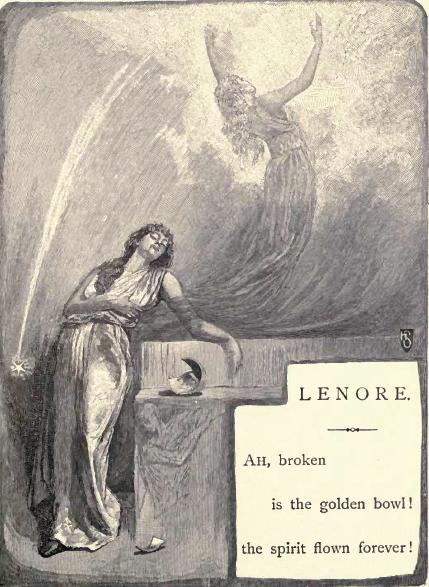
Technically, the story behind the second Ballade is thought to be, as it is generally accepted, based on Gottfried Bürger’s ballad, “Lenore.” In this story, Lenore’s fiancé, William, has not returned from the Seven Years’ War despite it having been over. Impatient and seeing other soldiers returning from war, Lenore complains and argues with God, complaining that He was unfair and never cared for her. Lenore’s mother consequently prays for her daughter’s forgiveness for her blasphemy, which could be punished by condemnation to Hell. Waiting worriedly, Lenore hears a knock on her door in the evening, and the stranger, who looks like William, asks Lenore to come with him to their marriage bed, travelling on horseback. Lenore, happy and believing the man to be William, climbs on the black horse as they travel at a feverish speed through dark and creepy terrain. Lenore, petrified, questions “William” why he rides so fast, and the man responds, “The dead travel fast.” As the sun rises, the two arrive at the cemetery, and the horse runs straight through the tombstones, and the man slowly deforms in appearance until it is revealed that the figure was Death himself. The marriage bed turns out to be the tombstone where William’s corpse lies. Lenore is then dragged down into the depths of the earth. This story shares plot elements with the myth of Hero and Leander, and either option is fitting for the structure of the second Ballade.
Liszt’s two Ballades stand as staple examples of both his virtuosic style and his maturing sense of musical taste. One showcases Liszt’s technical talent as he transitioned from the life of a touring virtuoso to that of a serious, full-time composer. The other exhibits the blossoming musical aspects of a middle-era Liszt, embodying the gold standard for famous Lisztian quirks and flairs that would dominate standard repertoire on the concert stage for many centuries to come. The two Ballades are valuable not in the sense of alternatives to the popular Chopin counterparts, but rather because they allow musicologists and pianists of the modern age to study the depths of a masterful and yet severely misunderstood composer.
