

Franz Liszt’s Liebesträume No. 3, S. 541/3, is one of Liszt’s few compositions widely recognized by the general public. Its short structure and lovely melody also make it a great entry point into the composer’s piano music. Yet, so much of the piece’s history and structure is overlooked, especially considering the many versions and arrangements of this short nocturne.
This piece is the third of three liebesträume (“Dreams of Love”), although the first two are seldom performed or heard in general. Liebesträume No. 3 is actually an arrangement for solo piano of the song “O lieb so lang du lieben kannst,” S.298. The song itself is scored for voice and piano, using a text by Ferdinand Freiligrath. It exists in two versions, catalogued as S.298/1 and S.298/2, respectively. The first one was written in 1847, while the second was written three years later. The piano version on which this article focuses was written and published in 1850.
The piece is in A-flat major. It begins with the melody surrounded by slow arpeggios, but quickly builds up to the first of two virtuosic cadenzas. These cadenzas are the most difficult parts of Liebesträume No. 3, requiring technical proficiency and precise control of volume. The climax of the piece takes place between the two cadenzas, where the song melody is played in octaves by the right hand, while arpeggiated patterns are played by both hands in the middle register of the piano.
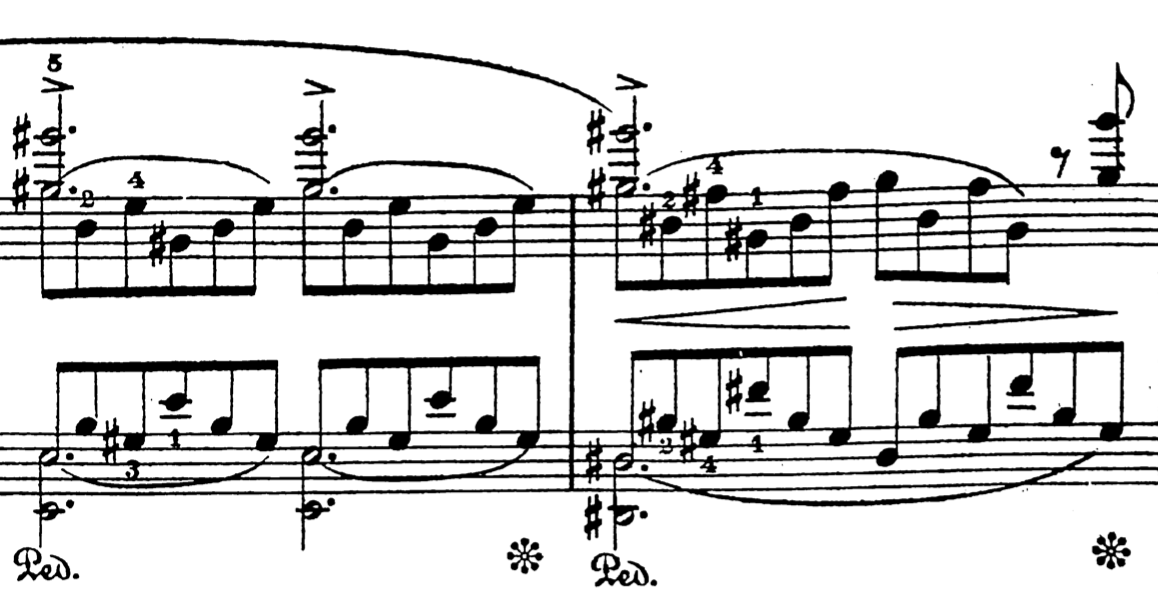
The piece ends much more quietly, rather than fading out. Here, Liszt demonstrates incredible skill in modulation: exposition and recapitulation are in A-flat major, while the middle development section is in B major.
In addition to the piano solo and voice and piano versions of this piece, Liszt also wrote an introduction and ending to the piece in the form of Einleitung und Schlußtakte zu Liebesträume III, S.135b, for harp. This was written by Liszt after Wilhelm Posse arranged Liebesträume No. 3 for harp.
Ultimately, Liebesträume No. 3 is a quintessential example of Romantic musical thought as it seeks to explore emotion and human experience rather than to pursue an intricate structure. It also showcases Liszt’s ability to arrange songs for piano, a skill he had developed through his many song transcriptions after Schubert (famously including Ständchen S.560/7 and Erlkönig S.558/4).
